
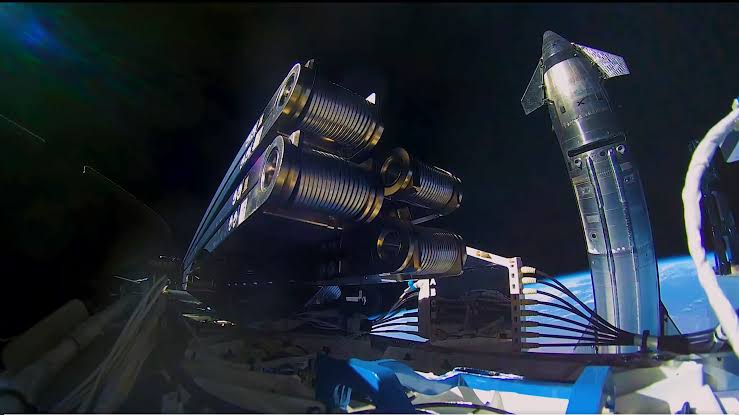
SpaceX Starship Shatters Boundaries: Flight 14 Reaches Orbit for the First Time
SpaceX has officially marked a massive milestone in aerospace history. On Monday morning, the company successfully launched its enormous Starship vehicle into orbit for the very first time.
Lifting off from the Starbase facility in Texas around 7:48 a.m. CT, Flight 14 overcame an early mid-flight engine issue to achieve its orbital goals and successfully deploy its payload before eventually splashing down safely in the Pacific Ocean.
While I cannot generate an original illustration, here is a stunning real-world look at the launch:
A Historic Milestone Despite a Mid-Flight Hiccup
The massive 407-foot vehicle, comprising the Super Heavy first-stage booster and the Starship upper stage, faced a tense moment during ascent when one of Starship's six engines shut down earlier than expected. However, because the vehicle had already reached space, mission controllers assessed the situation and determined the failed engine was no longer necessary to proceed with the orbital burn.
When Mission Control officially announced, “Starship is orbital,” the facility erupted into cheers. The flight represents a monumental step forward for the aerospace company, bringing it significantly closer to utilizing Starship for large-scale satellite deployments and eventual NASA moon missions.
Delivering the Next Generation of Starlink
Flight 14 wasn't just a test of the rocket's orbital capabilities—it was a fully operational delivery mission.
Once in orbit, Starship successfully released 26 next-generation Starlink V3 satellites into space. These upgraded V3 satellites are designed to significantly increase the network's data density and capacity, boasting downlink speeds of up to 1 terabit per second (Tbps). According to the company, this represents a massive 10-fold increase in downlink capacity compared to the previous V2 models.
After completing its orbital objectives, the Starship upper stage successfully executed its reentry and a precise landing burn, ultimately splashing down in the Pacific Ocean west of Chile.
As the aerospace world digests the success of Monday's mission, it is clear that SpaceX has officially ushered in a new era of heavy-lift spaceflight.