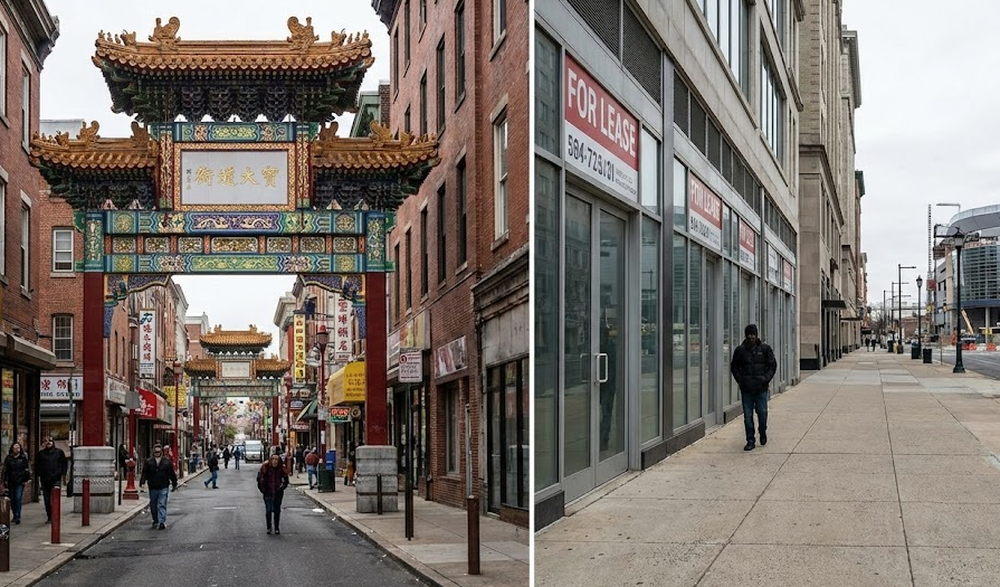
PHILADELPHIA - The war is over. The cranes are heading south. And a year after the 76ers shocked us all by walking away from the 76 Place proposal, we finally have the details on their new home.
As confirmed last week, the Sixers and Flyers will officially break ground this spring on a shared, $1.5 billion "next-generation" arena in the South Philadelphia Sports Complex, slated to open in 2030. It will house Joel Embiid (hopefully), the Flyers, and our future WNBA franchise.
On paper, this is the "peaceful" resolution. Chinatown residents are breathing a well-deserved sigh of relief; their neighborhood will not be choked by six years of construction dust. The Sports Complex remains the undisputed kingdom of Philly athletics. The traffic nightmares on Market Street have been averted.
So why does this "victory" feel so hollow?
The Hole in the Donut Walk down Market Street between 8th and 11th today. It is a ghost town of shuttered storefronts and the lingering gray facade of the Fashion District. When the Sixers pulled the plug last January, they didn't just take their basketball team; they took the only funded vision for revitalizing that corridor we had.
For two years, we screamed "Save Chinatown!" But we never answered the follow-up question: "Save Market East for what?"
Currently, the answer seems to be: for nothing. The city’s promised "Plan B" for the corridor has yet to materialize. Mayor Parker’s administration has pivoted to celebrating the South Philly investment—and who can blame them? It’s a safe political win. But it leaves a rot at the center of our city.
The Suburbanization of the Sixers By doubling down on the Sports Complex, we are also entrenching an outdated idea of what a city should be. We are telling residents that entertainment belongs in a cordoned-off concrete island by the highway, accessible primarily by car, rather than woven into the urban fabric where we live and work.
The new arena renders look spectacular. The promise of a WNBA team is thrilling. But let’s be honest: we took the easy way out. We chose the comfort of a parking lot over the messy, difficult, transformative potential of a downtown arena.
What Comes Next? Chinatown won. They organized, they fought, and they beat a billionaire. That is a historic feat. But a victory that leaves Market Street empty is not a victory for Philadelphia—it’s just a stay of execution for a dying commercial district.
If we don’t see a bold, funded vision for Market East by the summer—one that doesn't rely on a sports franchise—then we haven't saved the city. We’ve just moved the money to the parking lots.