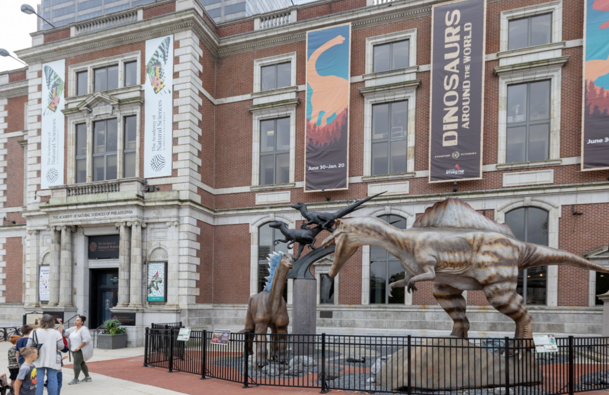
PHILADELPHIA - Following the highly controversial closure of the Academy of Natural Sciences museum on September 27, Drexel University has released a comprehensive statement addressing the public outcry and outlining the path forward. In a glimmer of hope for the museum's supporters, the university said it has been actively engaged in conversations for "the past few months" about preserving the collections and potentially reopening the museum space.
The William Penn Foundation's Offer
A major focal point of the recent public debate has been the William Penn Foundation, which recently suggested it could provide funding to keep the museum's doors open temporarily.
In its statement, Drexel addressed the offer directly. "While we sincerely appreciate the William Penn Foundation's public suggestion that it assist in temporarily keeping the Academy's museum open, we have not received a formal proposal with a defined level of financial support," the university stated.
Drexel noted that it looks forward to exploring the possibility of foundation support but emphasized that any plan moving forward must address the "substantial financial and operational challenges" of the institution. Specifically, the university pointed to "significant deferred maintenance needs" associated with keeping the Academy's 19 million specimens and collections safely housed at their current location on the Benjamin Franklin Parkway.
The university said any alternative course of action for public use of the building would need a sustainable operating model that addresses these capital needs and ensures the collections' long-term protection. These financial hurdles were the main reasons the Academy's Board and Drexel decided to close the museum to the public.
Intervention from State and City Leaders
To navigate the historic institution's complex financial and operational realities, high-level political figures have stepped in to mediate.
Governor Josh Shapiro and Mayor Cherelle Parker have designated Ambassador David L. Cohenas a third-party facilitator. Cohen is actively working with Drexel and the Academy's Board to map out a sustainable path forward. This mediation process is expected to result in a revised agreement between Drexel and the Academy's Board that will strengthen the protections for the collections and ensure their long-term preservation and accessibility.
To further support this complex transition, Philadelphia Deputy Mayor Patricia Wellenbach has been brought on as a senior advisor at Ambassador Cohen's request. Wellenbach's role is to offer guidance, stability, and direction for the institution during this turbulent period.
What Happens Next?
Despite the ongoing negotiations, Drexel made it clear that the current closure plans will remain in place until a new, fully executed agreement is approved by both the Academy's Board and the university.
"Until that agreement is fully executed and approved by both boards, we do not intend to alter the plans that the Academy's Board and Drexel have agreed to," the statement read.
However, the university explicitly welcomed further discussions with the William Penn Foundation and other interested parties. Drexel is inviting proposals that can meaningfully address the building's financial realities and create a sustainable path for its future public use—explicitly including the "potential re-opening of the museum."
The statement arrives as the "Save the Academy" coalition continues to rally support. A recent petition to save the museum garnered more than 107,000 signatures, and city council hearings on the closure are scheduled to begin on October 7. While the museum currently sits dark, Drexel's latest comments suggest that the story of the oldest natural history museum in the Americas may not be over just yet.