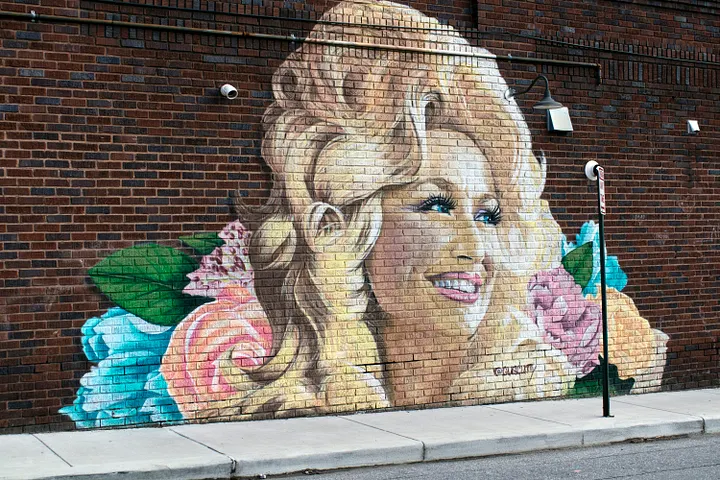
While the world remembers Dolly Parton today for her shimmering outfits, soaring vocals, and boundless philanthropy, her passing at age 80 also marks the loss of one of entertainment history's most brilliant business minds.
Parton, who died peacefully on Tuesday, built an empire that stretched far beyond Nashville. Behind the towering wigs and self-deprecating jokes about her appearance was a fierce, forward-thinking executive who demanded to own her worth in an industry notoriously designed to exploit it.
Owning the Masters: The Elvis Ultimatum
Perhaps the most defining moment of Parton's business career occurred in the mid-1970s. Elvis Presley wanted to record a cover of her newly penned song, "I Will Always Love You." It was a dream come true for Parton—until Presley's manager, Colonel Tom Parker, informed her that it was standard procedure for Elvis to take half of the publishing rights for any song he recorded.
For a young female artist in a male-dominated industry, saying no to the King of Rock and Roll was unthinkable. But Parton did exactly that. She walked away from the deal, determined to retain ownership of her intellectual property. That single decision preserved her exclusive rights to the song, which Whitney Houston would famously cover decades later, earning Parton millions and proving her instincts were remarkably ahead of her time.
Building Dollywood: An Economic Engine
Parton's business acumen extended well past music publishing. In 1986, she partnered with the Herschend family to rebrand a small theme park in Pigeon Forge, Tennessee, into Dollywood. It was a massive financial risk, but Parton saw it as a way to create sustainable jobs in the impoverished Appalachian region where she grew up.
Today, the Dollywood Company is the largest employer in Sevier County, Tennessee. The sprawling enterprise now includes the flagship theme park, a water park, luxury resorts, and dinner theaters, drawing millions of tourists annually and generating a massive economic ripple effect throughout the region. Parton didn't just build a brand; she built an entire regional economy.
Authenticity as the Ultimate Brand
Parton's greatest entrepreneurial triumph may have been her own image. She famously crafted her look—the acrylic nails, the heavy makeup, the glittering gowns—based on the "town tramp" from her childhood, embracing a hyper-feminine aesthetic that often caused people to underestimate her.
"I'm not offended by all the dumb blonde jokes," she once remarked, "because I know I'm not dumb... and I also know that I'm not blonde."
By leaning into the caricature, she disarmed her critics and negotiated from a position of underestimated strength. She built a billion-dollar brand on radical, unapologetic authenticity, proving that a woman could look exactly how she wanted, speak her mind, and still outsmart the best executives in the room.
As the music industry mourns its Queen today, boardrooms should be taking notes. Dolly Parton didn't just play the game—she owned the board.