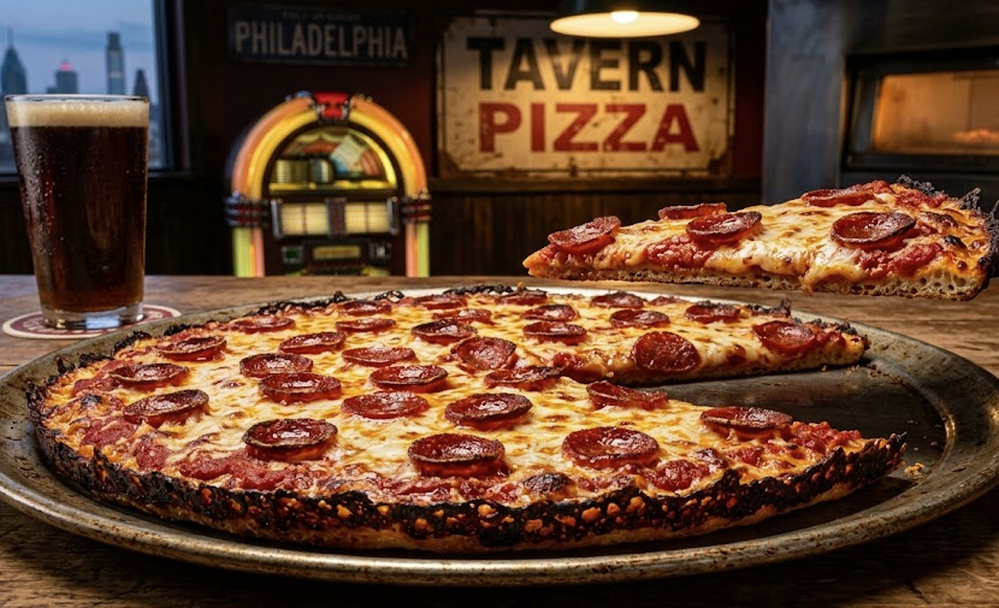
 Whether you call it bar Pizza, tavern Pizza, or Milwaukee-style Pizza, one thing is certain: this ultra-thin, crispy pie is experiencing a massive culinary renaissance. Long overshadowed by oversized New York slices and deep-dish behemoths, the humble bar pie is finally getting its due.
Known for a crust that eats almost like a cracker, this unique style is engineered for a very specific purpose—and it comes with a rich, working-class history. Here is everything you need to know about the defining characteristics and origins of the bar Pizza.
The Anatomy of a Perfect Bar Pizza
What separates a true bar pie from a standard thin-crust Pizza? It comes down to a few strict, uncomplicated rules regarding the ingredients and the bake.
- The Cracker-Thin Crust: The foundation of a tavern pie is rolled incredibly thin. It is designed to be light and crispy, acting as a sturdy vehicle for the sauce, cheese, and toppings (most notably, cup-and-char pepperoni).
- The Cheese Blend: Unlike traditional Neapolitan pies that rely on fresh mozzarella, authentic New England bar pizzas often utilize a sharp cheddar cheese blend. This provides a distinct, greasy, and highly savory flavor profile when melted over a simple crushed tomato sauce.
- The Signature "Lacing": This is the ultimate hallmark of a great bar Pizza. Instead of leaving a bare crust, the sauce and cheese are pushed entirely to the edges of the pan. As it bakes, the cheese meets the hot pan or oven surface, bubbling and burning just enough to create a caramelized, dark black, crispy edge known as "lacing."
A Working-Class History
The origins of the bar Pizza trace back to the 1940s along Boston's South Shore. Originally, these simple, unassuming pies provided cheap, filling sustenance for the blue-collar workers clocking out of the local shoe factories and shipyards.
However, the genius of the bar pie actually lies in a strategic hospitality move. Local bar and tavern owners realized they were losing lucrative beverage sales when hungry patrons left their establishments to find dinner. The solution? Serve a Pizza with a crust so thin and light that it satisfies the late-night salt craving without filling the customer up. By offering food that left plenty of room in the stomach for beer, the owners kept patrons in their seats longer, successfully driving up drink sales.
A Regional Favorite Expanding Its Footprint
For decades, this style of Pizza was a localized phenomenon, particularly popular in towns along the South Shore of Massachusetts, including Brockton and Randolph.
Today, the secret is out. The demand for that crispy, laced edge has helped the bar Pizza spread far beyond New England. It has become a dominant style across the Midwest, with a massive and dedicated following in the Chicago suburbs and Milwaukee. No matter where you find it or what you call it, the tavern-style Pizza hits the spot every single time.
